

The Rise and the Struggle: A Brief History
Jeep, part of the Stellantis group, has long carried a strong global brand image—ruggedness, adventure, off‑roading credentials. In India, it entered via tie‑ups (especially with Fiat), and launched with models like the Compass, Meridian, Wrangler and Grand Cherokee. For a time, there seemed to be promise: the SUV boom globally (and in India in particular) meant Jeep had a chance to carve out a niche in premium and super‑premium SUVs.
However, in recent years, the signs of decline have become hard to ignore. Sales have dropped, market share has shrunk to nearly negligible levels, and strategic mis‑steps seem to have compounded the troubles.
Key Reasons Behind the Downfall
Below are the principal reasons many analysts, automotive media, and customers believe Jeep has struggled in India:
1. Overpricing / Poor Value Proposition
- Jeep’s vehicles are considered expensive relative to what you get. The price tags are high, but many rivals offer better equipment, modern features at lower cost.
- As premium SUV market is crowded (Tata Harrier, Hyundai Tucson, etc.), customers expect high value in terms of features, after‑sales, etc. Jeep has often lagged.
2. Discontinuation of Petrol Variants and Emission Norm Issues
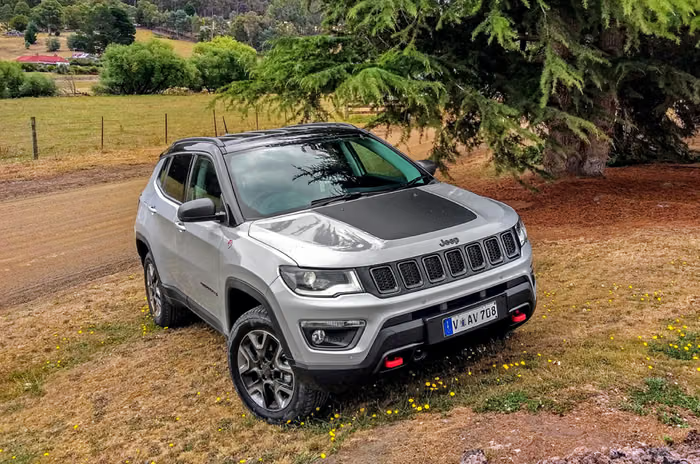
- Jeep discontinued the petrol engine option for the Compass in India in 2023 (1.4‑litre turbo petrol), citing non‑compliance with the newer BS6 Phase 2 emission norms.
- Petrol variants had accounted for a large share of sales, particularly in cities like Delhi where diesel is under regulatory pressure. Removing the petrol option hurt volume.
3. Lack of Feature Parity / Under‑Equipment
- For the price, Jeep models often lack features that competitors include as standard. Examples: ADAS, memory seats, rear sunblinds, blind‑spot monitoring, etc.
- Also the engine choices have been limited (diesel only in many cases), which further limits appeal.

4. Poor After‑Sales / Service Network
- Jeep inherited much of the showroom & service infrastructure via Fiat, which by then was already weak in many areas in India. This meant spotty service coverage, inconsistent spare part availability, higher maintenance cost.
- Reports of customers having to travel far for service, and high cost of maintenance parts.
5. Strategic and Management Missteps
- Constant leadership changes and shifting priorities seem to have hampered a coherent long‑term India strategy.
- Jeep (via Stellantis) made decisions like splitting dealership networks, rather than creating unified customer‑centric networks across brands. This limited reach especially in Tier‑2 / Tier‑3 cities.
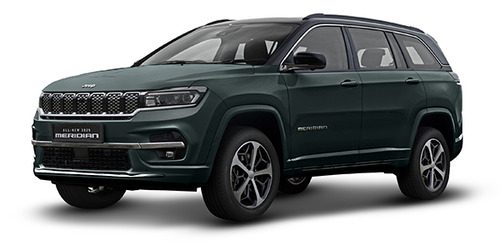
- The next‑gen Compass (project “J4U” on the STLA‑M platform) was cancelled for India because it was not commercially viable — development and production costs were too high, and expected volumes too low to justify investment.
Image Credit:
6. Market Shifts and Regulatory Pressures
- Consumer preferences in India are increasingly tilting toward petrol / hybrid / EV options, especially in metro areas. Diesel is under pressure, both socially (pollution) and regulators (emissions norms). Jeep’s continued dependence on diesel in its main portfolio is risky.
- Stricter emission norms (BS‑6 Phase 2) forced discontinuation of engines, but Jeep didn’t always have ready replacements.
7. Declining Sales & Market Share
- The numbers tell the story: for example, in one month (September 2024), Jeep’s market share dropped to ~0.1%, with very low unit sales.
- Monthly sales of models like Compass, Meridian have dwindled. E.g., in February 2023, Jeep sold 719 SUVs, a ~29.5% YoY drop.
Is Recovery Possible? What Jeep Could Do
While the decline seems serious, there are paths Jeep (or Stellantis via Jeep) might take to stem the slide, possibly reverse it:
- Introduce competitive petrol / hybrid / EV models sooner. As market shifts, having clean, efficient, lower maintenance powertrains will help.
- Better pricing / feature alignment — more “bang for buck,” ensuring that at a given price point, Jeep offerings at least match rivals on features, quality, after‑sales network.
- Expand service & sales network especially in Tier‑2 and Tier‑3 cities, to improve accessibility.
- Platform cost optimization — perhaps developing India‑specific platforms or using cost‑efficient global platforms without overengineering.
- Branding & customer trust: improving customer experience, reliability, spare parts availability. Word of mouth is strong in India; a few bad experiences can damage reputation heavily.
- Clear long‑term strategy: avoid flip‑flopping, maintain consistent leadership and investment commitments.
Image Credit:

Final Thoughts
The downfall of Jeep in India is not via a single failure, but a combination: regulatory misalignment (engines/emissions), misreading customer expectations (features, value, ownership cost), poor network/service, and high costs (both for the company and for the buyer). The SUV craze gave them hope, but in the premium SUV segment, margins are higher — but so are customer expectations. If you price yourself into a segment, customers expect premium in every sense.
Jeep is at a critical juncture: either adapt to India’s realities — cost, regulations, customer behavior — or risk fading into irrelevance here. The brand has strong appeal, but unless the structural problems are addressed, the downhill trend could continue.