
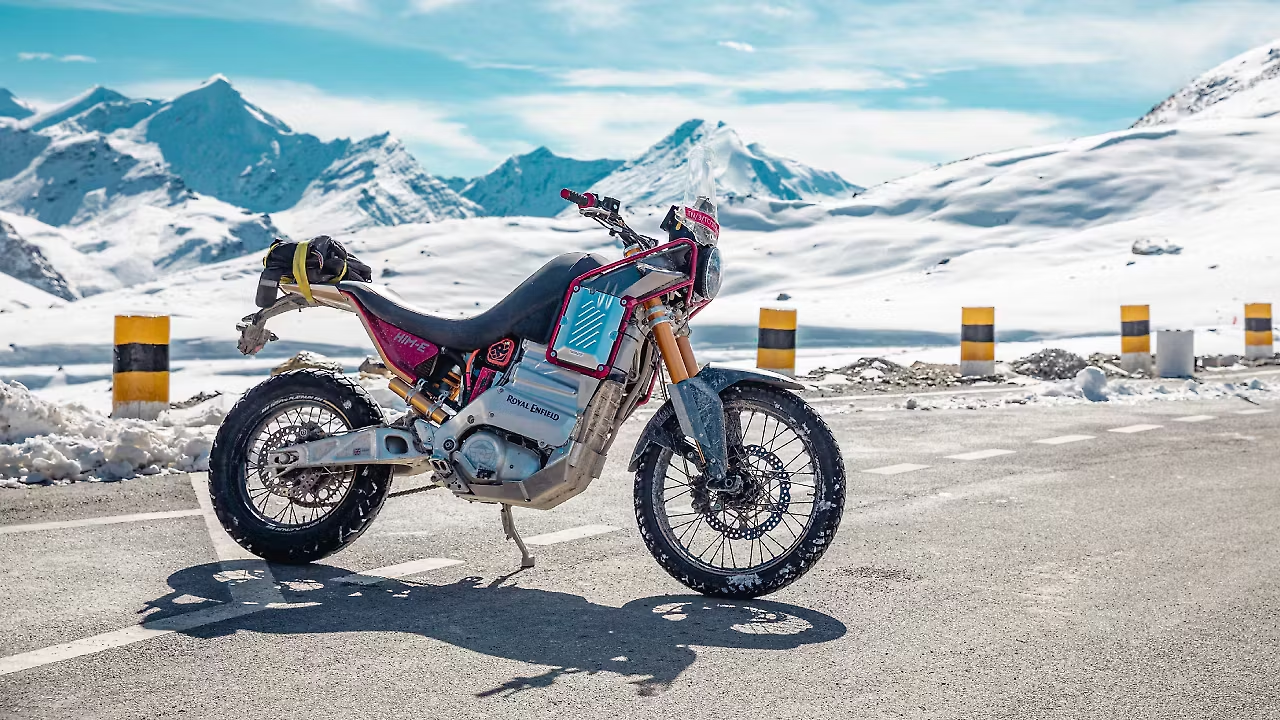
The Himalayan Electric: Royal Enfield’s Big Leap into EV Adventure
Royal Enfield has long been a name associated with rugged adventure motorcycles, iconic styling, and reliable performance on tough terrains. The Himalayan EV (Him‑E) is their ambitious move to merge that DNA with electric power. Here’s everything we know so far.

What Is It, and Where Did It Start
- The Himalayan Electric (often referred to as “Him‑E”) is Royal Enfield’s electric adventure/touring bike concept, meant to carry forward the ruggedness, design cues, and usage profile of the ICE Himalayan, but with an electric powertrain.
- The original concept (testbed) was unveiled at EICMA 2023 in Milan. This was more design + tech orientation, showing what possible EV direction RE is taking.
- Later, “Version 2.0” of the Himalayan Electric prototype was shown (around EICMA 2024) with more refined details.
Spotted Testing: What the Spy Shots Show
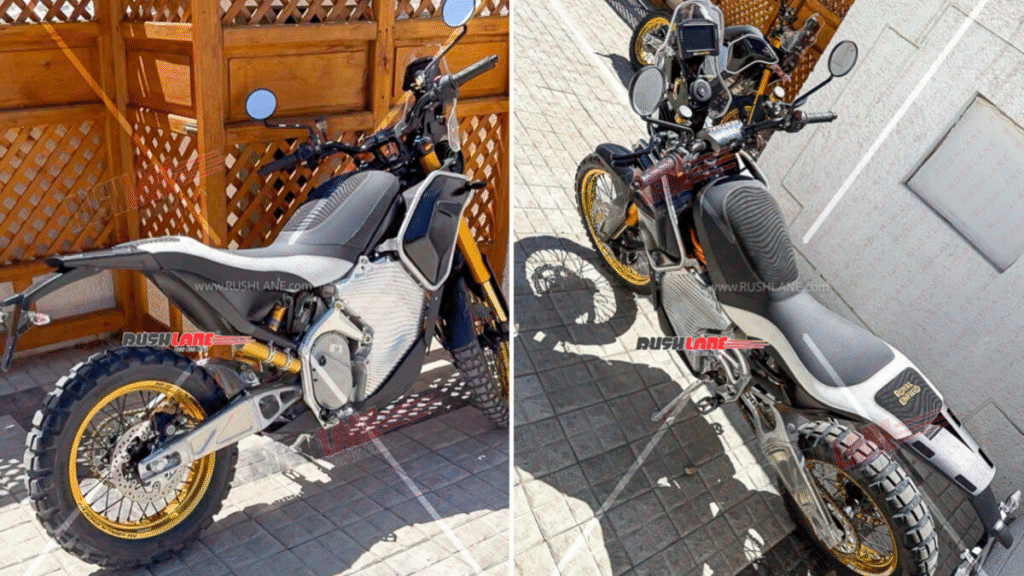
Recent spy photos and field tests (notably in Ladakh, among other high‑altitude, difficult terrain zones) show Him‑E prototypes close to a production‑ready form. Here are the details:
| Feature | What’s Observed / Changed |
|---|---|
| Frame & Materials | The test mule has an aluminium main‑frame, aluminium subframe, aluminium swingarm. The battery pack is encased, looking more refined and robust than earlier concept versions. |
| Suspension & Wheels | Upside‑down (USD) front forks, a premium rear monoshock (Öhlins in some spotted units), spoked adventure/off‑road capable wheels. Bridgestone Battlax Adventurecross tyres seen in some units. |
| Bodywork & Design | The beak (typical of many Himalayans) seems less pronounced or absent in some images; tall windscreen remains; single‑piece seat (as opposed to two‑piece) extending into the area where a fuel tank element would have been. LED lighting (headlamp, tail, indicators). Mounts for luggage possibly intact. Strong adventure/ADV cues in crash guards etc. |
| Instrument Cluster & Electronics | A larger screen (~7 inches or so) appearing; digital display; likely to include navigation, off‑road modes; rally‑style tower mount on some prototypes. |
| Brakes & Other Components | Single discs on both ends in many spotted units; petal disc design; upgraded calipers (front / rear) in some spy images. |
Image Credit: RushLane
Why Ladakh and Harsh Terrain Testing Matters
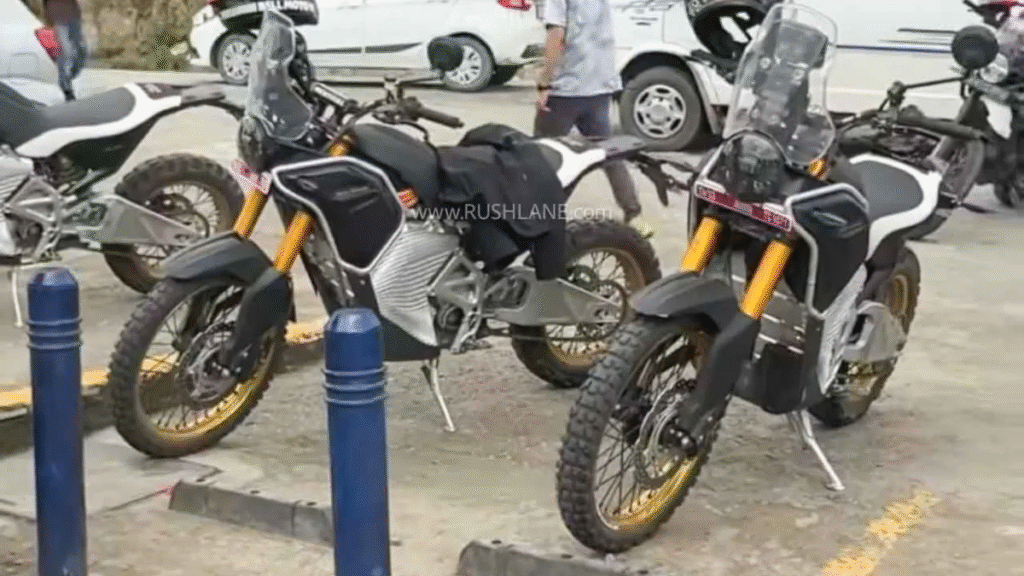
Royal Enfield is doing well to test the prototypes in places like Ladakh (high altitude, varying temperatures, low oxygen, rough roads) because:
- Batteries tend to suffer in extreme cold / heat; high‑altitude testing helps identify how thermal management works.
- Structural stress, chassis and frame durability, suspension behavior, tyre and wheel performance are all much more severely tested in such environments.
- If the Himalayan Electric can confidently perform in Ladakh, it gives credibility to its adventure touring usage—something that matters to RE buyers.
Image Credit: RushLane
Expectation vs What Royal Enfield Is Aiming For
What RE seems to be trying to achieve with the Himalayan EV:
- Preserve the adventure/touring capability that people like about ICE Himalayans (good suspension travel, ruggedness, off‑road usable components).
- Retain brand identity: styling cues (round headlamp, upright riding position, strong tank/body‑frame design), luggage‑friendly design, wind protection etc.
- Bring in EV tech that is robust: battery casing, frame integration, possibly battery as structure, better charger and motor components, advanced display/instrumentation.
- Push quality: premium suspension (Öhlins in some test mules), good wheel/tyre setup.
Conclusion: Is It a Game Changer?
From what’s been observed so far, the Himalayan EV looks promising. It is being built with serious attention to detail, rugged hardware, good off‑road credentials, and seems to be approaching near‑production readiness. If Royal Enfield can deliver good range, reliable performance, and strong service support without compromising too much on weight or price, it could very well be a game‑changer in the Indian adventure motorcycle—and EV—space.